Specialists in oral translation services

Wednesday, November 29, 2023

Lenguas y música (II)

Por Cristina Amils, AIB

Hoy me gustaría adentrarme un poco más en la conexión que pueda existir entre los intérpretes de conferencias y los músicos. Como ya comenté en la primera parte de este artículo, me sorprende la cantidad de colegas de profesión que se dedican activamente a la música, de manera más o menos profesional y eso me lleva a pensar que algunas funciones de nuestro cerebro deben coincidir en ambas actividades. 

De entrada, los puntos en común entre unos y otros los podemos encontrar en el procesamiento auditivo. Cuando un músico escucha o interpreta un tema tiene que recurrir a la percepción e interpretación de estímulos auditivos complejos, mientras que un intérprete también tiene que recurrir a su capacidad auditiva para escuchar la producción oral del original y, a la vez, reproducir su equivalencia en otro idioma.

La memoria de trabajo es una herramienta que ambas profesiones utilizan de forma intensa. Mientras que un músico tiene que retener patrones, secuencias y estructuras musicales en su memoria mientras toca, el intérprete hace lo mismo con las secuencias de información que va recibiendo durante su trabajo.

Ambas actividades requieren procesar el lenguaje, aunque sea de forma diferente. Los músicos necesitan el lenguaje para leer las partituras y traducirlas en tiempo real en música, igual que los intérpretes necesitan el lenguaje para procesar rápidamente y de forma activa los contenidos que perciben y trasladarlos a otra lengua.

Por lo tanto, el multitasking y el control cognitivo son imprescindibles para ambos para desarrollar su actividad. Mientras que el músico tiene que controlar el manejo de su instrumento a la vez que el ritmo, el fraseo y el tempo, el intérprete tienen que escuchar, entender/analizar y reproducir un mensaje en pocos milisegundos. Todo esto requiere una atención y concentración permanentes, que permitan sostener el ritmo constante necesario para la producción musical o lingüística.

La formación y práctica constante de los músicos y de los intérpretes pueden provocar cambios neuroplásticos en el cerebro. La plasticidad del cerebro de un músico y de un intérprete, por lo tanto, puede llegar a ser superior a la de otras profesiones.

Precisamente parecen existir algunas coincidencias en las áreas del cerebro implicadas en la producción de música o en la interpretación simultánea. Las áreas del cerebro con mayor actividad a la hora de interpretar podrían ser la corteza motora, premotora, así como una parte del área de Broca y de los ganglios basales. En los músicos, se activan especialmente la corteza motora y prefrontal, así como las áreas de Broca y Wernicke y el sistema límbico.

Parece, por lo tanto, que a músicos e intérpretes nos unen algunos elementos y tendencias y que tendemos a ejercitar acciones similares. No sé si sirve como explicación genérica, pero en todo caso tiendo a pensar que no es pura coincidencia que seamos unos cuantos los que nos dedicamos a ambas actividades. 

Lo que sí puedo afirmar por experiencia propia es que tanto la interpretación de conferencias como la producción musical exigen mi concentración absoluta y frenan el flujo natural de pensamientos que toda persona tiene durante el día. La diferencia que observo es que la música me ofrece una gran libertad creativa y genera una potente energía positiva, comparable solo con pocas otras cosas. 

Aquí acaba esta miniserie de dos artículos sobre lengua y música. Animo a todos los intérpretes a dedicar una parte de su tiempo a escuchar y/o a hacer música y a disfrutar de este bálsamo para el alma. 

Friday, October 20, 2023

LENGUAS Y MÚSICA (I)

Por Cristina Amils, AIB

Siempre me he preguntado qué vínculo existe entre la música y el multilingüismo. ¿A quién no le ha llamado la atención la gran cantidad de intérpretes de conferencias que en su tiempo libre se dedica a producir música de un modo o de otro?

Yo misma soy hija de pianista y me he criado inmersa en un mundo repleto de músicas diversas y múltiples lenguas. A veces pienso que no podía acabar haciendo otra cosa que la que estoy haciendo hoy: soy intérpretes de conferencias y compagino mi profesión con mi hobby de cantante (básicamente de jazz, pero también de otros estilos afines).

Mi padre, catalán, se formó como músico clásico en Barcelona y muy pronto emigró al continente africano, donde empezó a trabajar en locales nocturnos para “blancos”, tocando música de ambiente o de baile. No olvidemos que el fenómeno de la música enlatada y/o de la mano de disyóqueis llegó bastante más adelante. Mi padre vivió en unos cuantos países antes de aterrizar en Suiza, donde conoció a mi madre, alemana. Entre ellos hablaban en francés, lengua que compartían con la mayoría de músicos de todas las nacionalidades posibles con los que trabajaban, pero gracias a los viajes y al contacto con músicos de diferentes países, mi padre acabó hablando fluidamente cinco idiomas. Cuando se acercaba el final de mi etapa en el instituto, mi padre me empezó a hablar de esa profesión tan interesante que había descubierto en algún lugar y que requería dominar unos cuantos idiomas (mi padre estaba fascinado por esas personitas con auriculares y micrófonos, metidas en una cabina). Me preguntó si no me interesaría estudiar interpretación y… ¡aquí estamos!

Todo esto me ha llevado a menudo a preguntarme qué tienen en común estos dos universos paralelos, si es que tienen algo en común, y, tras indagar un poco, he comprobado que, efectivamente, coinciden en unas cuantas cosas...

  1. Estructura y gramática: tanto las lenguas como la música tienen sus propios sistemas de estructuras y gramática. Las lenguas recurren a la sintaxis y a las reglas gramaticales, mientras que la música recurre a las notas, las escalas y los patrones de ritmo. Por lo tanto, ambos sistemas disponen de reglas que rigen la disposición de sus elementos.
  2. Comunicación expresiva: tanto las lenguas como la música se utilizan para transmitir emociones, ideas y mensajes. Mientras que las lenguas transmiten principalmente información verbal y escrita, la música transmite emociones y estados de ánimo no verbales a través de la melodía, la armonía y el ritmo.
  3. Reconocimiento de patrones: tanto las lenguas como la música se basan en el reconocimiento de determinados patrones. En una lengua, los oyentes o lectores reconocen los patrones formados por palabras, frases y reglas gramaticales, mientras que en la música los oyentes identifican patrones en la melodía, el ritmo y la armonía.
  4. Aspectos temporales: la música y las lenguas son fenómenos que se experimentan a través del tiempo. En el lenguaje, la comunicación se desarrolla a través de una secuencia de palabras y frases. En la música, el paso del tiempo es decisivo para crear melodías, armonías y ritmos.
  5. Interpretación: tanto las lenguas como la música requieren del oyente o del lector que interprete lo que está oyendo o leyendo. La interpretación supone entender la emoción o el significado transmitidos y puede ser influido por factores culturales e individuales.

Además, en el caso del multilingüismo hay que añadirle otros aspectos coincidentes, como por ejemplo la memoria y la memorización. La memorización es necesaria tanto para aprender y usar múltiples lenguas, como para producir música. Las personas multilingües tenemos que recordar vocabulario, reglas gramaticales y expresiones idiomáticas, mientras que los músicos memorizan composiciones musicales, escalas y diferentes técnicas asociadas al instrumento que tocan.

La cadencia y el ritmo son también elementos fundamentales en ambos casos. Sin ellos, no sería posible dominar un idioma extranjero y no se podría interpretar una pieza musical.

Lo que más me llama la atención, sin embargo, es la característica más simple y básica que une las lenguas y la música: ambos son canales de expresión individual de pensamientos y emociones.

También hay que destacar que, a diferencia de cualquier lengua natural, el lenguaje de la música es un lenguaje universal para el que no se necesitan intérpretes de ningún tipo 😉 La música transciende las diferencias culturales gracias a sus estructuras básicas.


Friday, September 29, 2023

Coping With Uncertainty

By Mary Fons, AIB

My generation is probably one of the last to have grown up with the idea, hope or expectation of lifelong employment with the same organization. In Spain, this was the province of civil servants and bank employees (landing an apprenticeship with a savings bank at an early age was seen as a sinecure), but everyone knew about the sarariman in Japan. Even in the United States, older relatives who held jobs (mostly male) seem to have worked for the same company for decades. My grandfather delivered milk for the same company from shortly before his marriage to the day that he retired.

Obviously, not everyone was in this position and not everyone wanted it. A sinecure sounds great, but sometimes the price to pay seems too high: underling status or uninteresting work. Creative people easily chafe in overly restrictive working conditions or when placed under supervisors who just don’t get it, and some people have physiological or psychological needs that don’t mesh well with standard working hours.

Are you certain?

My father was a full professor of business management at a public university (i.e., someone with a lifetime job) but he tended to be in favor of employment at will as a general principle.  That said, once he realized I wasn’t planning a sideways move into academia as he had originally hoped, he told me he thought I ought to seek a staff interpreter position in the EU or the UN system. At the time, the idea was horrific. I simply love the variety of events and topics I get to interpret as a freelance, and while this variety includes many varied and interesting assignments with the EU or international and intergovernmental organizations, I really get a kick out of any kind of assignment where I know for a fact my services are needed and will be actively used,  so it's good to have a mix.

I’ve been a happy freelance for many years and was living in a gig-economy industry long before the term was coined. These days, however, the degree of uncertainty is becoming hard for me to cope with. These days I find that juggling “very likely” options for the same dates is simply too many choices and too much stress. It’s an honor to be chosen and I like to respond to that honor by accepting when I’m free and able to take the assignment, but it’s hard to manage your life when you’re tentatively looking into flights and rail travel for potential assignments that many never materialize. At a certain level of uncertainty, you just have to bite the bullet and ask for confirmation or release by a certain date that works for you, even if the client or the consultant interpreter would rather have more time. 

Covid-19 lockdown was a black swan, an unknown unknown that hit us hard, but most conference interpreters learned new skills and managed to deal with it. This feels different. Maybe it’s my age, but I do find that the cumulative drip-drip-drip of known unknowns is having a huge impact on my personal and professional life. The “real” work of preparing for assignments and interpreting them is still great, but the admin side is growing daily and carving away at my enjoyment.

So far, everything I’ve written in this post is 100% my own. But I just used Bard (rather than ChatGPT) to help me with ideas for an upbeat ending – and realized that the really good ideas were there in the article all along. I still enjoy learning, so I can and will choose to enjoy learning to cope with the seemingly sweeping uncertainty. After all, however certain and necessary death or taxes may be, their certainty doesn’t make them appealing. So I will carve out bigger and better chunks of time for myself even if it means refusing the honor (and the fun!) of some potentially great assignments. Bard also advises surrounding oneself with positive people and I certainly see the point, but I will keep my sad-sack friends along with the positive ones because I appreciate real diversity and real friendship. Thanks, real friends!


Friday, July 28, 2023

Artificial intelligence in interpreting—and elsewhere

 By Martha Hobart, AIB

Photo by SergeyBitos From Shutterstock

Inspired by Patricia’s interesting post describing her experiments with ChatGTP in last month’s AIB blog, I decided to dive a bit deeper into the fascinating world of artificial intelligence. Where I found a bit of everything, enough to keep anybody online for many hours.

Let’s look first at the current definition of AI.

A basic view taken from various sources:
    1.    The ability of a computer or other machine to perform those activities that are normally thought to require intelligence.
    2.    The branch of computer science concerned with the development of machines having this ability.
    3.    Intelligence exhibited by an artificial (non-natural, man-made) entity.
Plus more.

Some core AI concepts:
Artificial Intelligence vs Machine Learning and Deep Learning:
    •    The term Artificial Intelligence has the broadest scope. It refers to any type of technology that appears to “make its own decisions.”
    •    Machine Learning is one of the methods used in advanced AI solutions. ML algorithms self-improve automatically by analyzing more and more data.
    •    Deep Learning is a type of machine learning that uses artificial neural networks.

If you really want to get into the weeds, try this detailed discussion.

♦️ Resources for AI services & info

Most of this article focuses on AI in general to provide an overview of what it is and what it is capable of. Much of what is written about AI in interpreting (especially conference interpreting) is slanted in such a way as to transmit the idea that it is fully “mature” and says little or nothing about its limitations.

There are dozens of platforms that offer tools & services for businesses, groups and individuals wanting to use AI in a variety of ways.

I stumbled across a platform called Tidio, which offers services to assist e-commerce businesses in communicating with customers using live chat and chatbots.

They set up an experiment involving some 20,000+ internet users in a test of their skills at distinguishing between AI and human creations (photos, artworks, music and texts). The test is still available to anybody who wants to take it and is followed by a detailed report on the overall results of the original participants.

You’ll find it here.

The report on the test results is extremely detailed and informative.

The page has a lengthy list of links that will take you to specific sections of the report, which led me to hours of exploring the net for information on AI itself plus endless ways of using it.

♦️ Some examples of AI

Let’s look at a few ways in which AI can be used, sometimes for serious endeavors and sometimes for other purposes.

Conversation between bots: video
Two AIs Talking To Each Other: Bing Meets ChatGPT
This is a good illustration of the difference between a traditional chatbot (designed to assist users but can also drive them crazy) and a bot created by ChatGPT (designed to engage in human-like conversation).

Conversation between human & bot: video (Distinguishing between human & AI)
Challenges to overcome in creating bots that appear to be human.
I Challenged My AI Clone to Replace Me for 24 Hours 
A video that discusses creating what are known as avatars, designed to make people think they are a real person and not a bot.

So far we’ve seen examples of videos featuring bots. Then there are physical robots — machines designed to look and act like humans. Which is a whole other rabbit hole we won’t go down now.

Producing articles on different subjects: scientific, political, fiction, etc.
It’s not necessary to discuss this here because Pat’s blog post did a thorough job on the subject. Although she focused on ChatGTP, this tool is based on the same underlying algorithmic structure as more sophisticated AI generators.

If you’d like to get a taste, below is a simple online dialogue generator. There are more in Patricia’s article.

Composing music
Here are some examples of music generated by AI at different stages in its development.
 
2 songs, both from 2016:
Daddy’s car (said to be the first song composed by AI)
Mr. Shadow

From 2021: 
Classical music composed by AI, played by humans

Now we’re into early 2023. Google’s new AI turns text into music, which means you tell the AI what you kind of music you want, and then see what you get. Here are several 30-second audio clips in different styles.
 
If you want more, just go to YouTube and go nuts.

♦️ The touchy subject of whether AI can be sentient or have emotions.

AI sentience is a hot-button issue that generates a good deal of concern among people who do not have a clear idea of how AI technology works. It is also a fertile field for many media outlets whose favorite pastime is fearmongering.

A recent article on the subject: Is AI Sentient? Could it Ever Be? Experts Weigh In

My opinion is that the real risk in AI—at least for the present—is its misuse by people who use it to manipulate people’s behavior and beliefs. We should remember that tools like ChatGTP function by scooping up information from the internet based on instructions given it by humans.

Sentience is much more than information produced by humans; it requires a clear definition of human consciousness. With this definition in hand, to quote from the above article, "[scientists and researchers] would also need to use that definition of consciousness and translate it into exact algorithms to program into AI systems. Human emotions, perceptions, etc., would have to be deeply understood in a way that makes it possible to give that knowledge to a computer system."

So far, we are a long way from understanding and defining consciousness.

Can emotion be transmitted using AI?

Again, this idea is based on ignorance of how AI works. There are AIs today that can create images of persons apparently showing emotion, but these supposed expressions of emotion are the result of algorithms created by humans that control facial and body expression. In still images it can sometimes be difficult to distinguish between human and AI, but in videos the results can be pretty crude.

♦️ AI in interpretation & translation

And so we come to what most of you have been waiting for: AI in interpretation and translation.

I will not go into the current state of the art because Patricia covered that thoroughly in her blog post of June 2023

At this stage in the history of AI, it’s not possible to draw any kind of meaningful conclusions about the future effects of AI on interpretation. Machine and computer-assisted translation have been around for a long time and could be considered a precursor to translation by AI. I didn’t research this subject at any length. Apologies to translators 😇

Interpreting using AI, on the other hand, is taking off wildly. Let’s take a look at its trajectory.

I started by scouring the internet in general using a variety of search phrases. Most of what I found were articles from as far back as 2014 that talked enthusiastically about future prospects for using AI in both simultaneous and consecutive interpretation. I also found a number of academic studies.

Nonetheless, a number of systems were already being rolled out. Here’s an article from 2019 to give you an idea of where things were then:

And here’s one that discusses how ChatGPT can be used in interpreting, so it must be quite recent (I hate it when they don’t give you the date of publication).

I also did some searching on LinkedIn, using the search phrases "simultaneous interpretation" "artificial intelligence", "simultaneous translation artificial intelligence" and "conference interpreting artificial intelligence" and got a few results. Not much from individual interpreters, some expressing concern about the future of the profession but others saying, more or less, wait and see. There is still a long road ahead for this infant technology, and it’s too soon to feel threatened by it.

A few of the more insightful comments from interpreters.

Laura Heredia Abolafio
- An informative summary of what is happening in the sector after attending a Workshop on Interpreting Technologies.

Cyril Flerov
- In a post describing Google’s monumental flop in the presentation of its experimental AI called Bard, he wonders about similar errors in using this AI for simultaneous interpretation. He comments, "The problem is not in AI making obvious mistakes. The problem is in it saying something that sounds true and plausible but is not true."

Marta Altamira Cabré
- In response to fears expressed by some interpreters of being replaced by AI, she has this (and more) to say: “As I see it, machine interpretation will open up a huge number of new markets but I am also convinced that human simultaneous translation will coexist with it and, I dare say, will continue to grow as it has done with the advent of RSI - contrary to what many believed.”

On the other hand, there is a lot of what I can best describe as hype coming from platforms offering AI interpreting services for SI, who tend to tout their offerings as fully market-ready. I can’t help wondering.

However, in a press release entitled KUDO Unveils KUDO AI; the World’s First Fully Integrated Artificial Intelligence Speech Translator, the company described it as a "pilot version" and stipulated that "…now, in addition to the skills of our professional human interpreters, we have an adjunct AI component in our portfolio capable of real-time speech translation in certain use cases."

They then set out recommendations for when to use AI and when to use human interpreters. Other platforms are not so open.

I couldn’t find any platforms offering a demo of their AI interpreting systems. Again, makes one wonder…

To give a more realistic view of human vs. AI, two top-line interpreters, Barry Slaughter Olsen & Walter Krochmal, did an experiment in which they compared human and AI interpretation, using Kudo’s AI, and discussed the differences they found.

♦️ A few bits & pieces

A group of Redditors devised a prank that tricked an AI-written website and caused a stir among World of Warcraft players.

A teacher discusses his experience with students using AI for writing their papers. Should you try to ban the practice outright? Where do you draw the line on computer assisted research and writing? I am reminded of the time eons ago when calculators first appeared and students naturally wanted to use them in their mathematics classes.

A short film about a man who hires an AI robot to seduce a politician, and what happens next.

I had doubts about including this film because I found it rather rough. But what led me to use it was the kicker that comes at the end. Many times what seems to be a failure of AI is really the result of getting what you didn’t expect.

What the film illustrates is that what we think may be a mistake/failure of AI is actually our lack of skill at formulating our instructions.

As the wise advice goes: Be careful what you wish for. You may not like what you get.

♦️ Conclusions?

I don’t have any wisdom to impart about all the foregoing except that it’s best just to take it easy, learn what you can about artificial intelligence and follow its progress.

And have some fun with it.

Sunday, June 18, 2023

AI in Conference Interpreting: Transcending The Tower of Babel, One Algorithm at a Time

 Por Patrícia Lluch, AIB

If there's one thing I've learned in my 29 orbits around the sun as a conference interpreter, it's that language is just as complex, idiosyncratic, and unpredictable as the humans who speak it. However, it seems we've entered an era where artificial intelligence (AI) is starting to insist, "Hold my beer."

AI technologies are now a significant part of the conference interpreting landscape, and my interpretation booth is increasingly becoming more like an episode of Star Trek, minus the funky Spock ears, of course. From Automated Speech Recognition (ASR) to Text-To-Speech (TTS) systems, end-to-end speech translation to AI-based sentence segmentation, the gadgets and gizmos that interpret for us have taken center stage. But as with any good drama, there are plot twists galore!

Starting with ASR, these platforms have achieved a feat that many thought impossible: listening to humans ramble on and making sense of it. Well, at least to an extent. These systems can transcribe spoken language into written text with surprising accuracy. Now, if only they could decipher the mysterious language my teenager speaks at home!

Then there's Text-To-Speech (TTS) technology. If you thought robotic voices were limited to Siri's blandly charming instructions or your GPS's emotionless directions, think again. TTS has become sophisticated enough to parrot human speech quite convincingly, though it still falls short of mastering the delicate art of sarcasm. 

But the real showstopper in our AI ensemble cast is the end-to-end speech translation. In theory, it's a seamless process. You input the spoken word in one language, and the system spits out the equivalent in another. Magic, right? However, in reality, it's a bit like trying to juggle flaming torches while riding a unicycle. The system grapples with cascading errors, where one minor mistake can trigger a snowball effect and cause an avalanche of inaccuracies. Remember the game of Telephone we used to play as kids? Exactly.

Latency is another buzzkill. AI might be able to play chess, compose music, and, I don't know, probably make a mean Margarita by now, but speed can still be a sticking point. A delay in interpreting can turn a well-timed joke into an awkward silence, or a critical negotiation into a miscommunication debacle. 

Now let's talk sentence segmentation. Human speech isn't exactly known for its perfect punctuation (we're not writing an English essay here!). AI often struggles with this, awkwardly inserting breaks where none exist and sounding as natural as a kangaroo on a treadmill. 

Despite these hurdles, AI is becoming increasingly adept at spontaneous effects, such as adapting to different accents, dialects, and speech rates. However, it still tends to get thrown off by a sudden influx of regional slang or fast-paced delivery, and can sometimes resemble a flustered tourist in a foreign country. 

On the bright side, these AI systems won't complain about working overtime, demand coffee breaks, or lose their cool when asked to interpret a heated debate. And unlike their human counterparts, they're immune to conference-room fatigue, jet lag, and that one delegate who insists on speaking at the speed of light.

AI in conference interpreting is undoubtedly a game-changer. But for all its dazzle, it's worth remembering that these systems are still "learning" languages, much like a determined student buried under stacks of foreign language books. The beauty of language, with all its nuances, quirks, and unpredictability, continues to keep us human interpreters in business.

Until the day an AI can appropriately interpret a diplomatic faux pas, or seamlessly weave a culturally sensitive joke into a translation, this 54-year-old will keep her headset firmly in place, ready to jump into the linguistic fray. Because, let's face it, even if AI can translate a joke, it won't be able to laugh at it...at least not yet.

****

Probablemente habréis notado ya que este texto no lo he escrito yo. Ha sido generado por ChatGPT-4. El punto de partida ha sido esta primera orden:

"write a blog article from the perspective of a 54 year old conference interpreter about the impact of the use of IA in conference interpreting, which systems exist, what are their limitations and their advantages in comparison with human interpreters. Mention automated speech recognition, TTS, ent-to-end speech translation, latency, sentence segmentation, cascading errors and spontaneous effects. Use a journalistic style with a touch of humor."

He cambiado tan solo dos cosas del texto resultante: "his" por "her" en el último párrafo y la cifra 54 por un 29 en el primero, para corregir la confusión entre mi edad y la duración de mi carrera como intérprete hasta este momento. No es que tenga ningún problema con mi edad, pero ponerme un cuarto de siglo de más de carrera así, alegremente, podría dejar un poco extrañados a aquellos que me conocen. Y mi sexo sigue siendo femenino.

A continuación le he dado una segunda orden: "rewrite the same article in a factual, journalistic style". El resultado ha sido:

"The Changing Landscape of Conference Interpreting: A Look at the Influence of AI Technologies"

In the evolving field of conference interpreting, artificial intelligence (AI) technologies such as Automated Speech Recognition (ASR), Text-To-Speech (TTS), and end-to-end speech translation are becoming increasingly prevalent. These technologies are significantly reshaping the way conference interpreting is performed, offering both new capabilities and challenges.

ASR technology, which transcribes spoken language into written text, has demonstrated remarkable accuracy in recognizing and understanding human speech patterns. This advancement has allowed for a more efficient transcription process, though the technology continues to face challenges, particularly in handling complex human speech filled with colloquial expressions and nuanced meanings.

Similarly, TTS systems have progressed, providing a more human-like quality to synthesized speech. However, the expression of emotion, sarcasm, and certain speech nuances remain outside the current scope of TTS technology.

One of the most noteworthy advancements in AI-based conference interpreting is the development of end-to-end speech translation systems. These systems aim to translate spoken language input into another language output directly, theoretically creating a seamless translation process. However, these systems often grapple with cascading errors, where one incorrect translation can cause a domino effect leading to major inaccuracies in the overall translation. 

Latency also presents a significant challenge in AI-based interpreting. Time delays in the translation process can disrupt the flow of conversations and may lead to miscommunication, particularly in time-sensitive discussions. 

Another inherent challenge for AI in conference interpreting is sentence segmentation. As human speech doesn't conform to the punctuation rules of written language, AI systems often struggle to recognize where a sentence begins or ends, affecting the fluency and naturalness of the translation output.

On a more promising note, AI technologies have made strides in adapting to spontaneous effects, such as different accents, dialects, and speech rates. Nevertheless, AI systems can still be easily overwhelmed by sudden shifts in regional slang or speech speed, underlining the need for continued refinement.

AI systems provide several significant advantages in conference interpreting. For instance, they can work continuously without requiring breaks, aren't susceptible to human fatigue, and can process large amounts of linguistic data. However, these systems are still "learning" languages and, as such, they cannot fully capture the depth of cultural and contextual nuances that human interpreters provide.

In conclusion, AI technologies are undeniably reshaping the field of conference interpreting. They offer new efficiencies and capabilities but also present ongoing challenges. As these technologies continue to evolve, their increasing sophistication and potential to assist human interpreters become more apparent. Yet, the nuances, spontaneity, and complexity inherent in human languages continue to demand the involvement of skilled human interpreters. This dual requirement indicates a future where AI technologies and human expertise will coexist and collaborate in the realm of conference interpreting.

****

Y después, admito que por pura curiosidad malsana y con una pizca de malevolencia, he copiado y pegado en AI Text Classifier un fragmento de 320 palabras del primer texto para ver si esta herramienta, que pertenece, al igual que ChatGPT, a OpenAI, lo reconocía como generado por una inteligancia artificial. La respuesta, sorprendentemente, ha sido: "Es altamente improbable que este texto haya sido generado por una inteligencia artificial. Hmmm...

Antes de sacar ningún tipo de conclusión de todo esto quiero que quede claro que no soy especialista en IA ni en su posible uso en el sector de la interpretación. Mi contacto con herramientas de IA es más que somero. De hecho se reduce exactamente a lo siguiente: hoy he usado por primera vez ChatGPT con el resultado que acabamos de ver, que en mi opinión no está nada mal, aunque la verdad es que lo encuentro algo soso. También he usado hoy por primera vez el clasificador de textos, que claramente no es fiable. Y en otro orden de cosas el 20 de marzo, a petición de Lourdes de Rioja, leí un texto en voz alta para probar Cymo, una aplicación de transferencia de palabra a texto. El resultado fue muy bueno y lo encontraréis colgado en el Instagram de Lourdes. Por lo demás he usado DeepL en distintas ocasiones en un contexto profesional, imagino que como todos a estas alturas... Y ¡eso es todo, amigos! Este es, pues, mi parco perfil de usuaria. 

Concluyo a partir de este mínimo contacto y viendo un poco hacia dónde está avanzando la profesión que lo que más nos conviene es aprovechar este universo de nuevas posibilidades en nuestro propio beneficio: que nos llega el texto de una intervención y sabemos que va a ser una tortura china hacerla directamente pero que si la pasamos por DeepL nos saldrá bordada, pues se pasa; que hay que hacer una consecutiva y consideramos que usar Cymo en paralelo con las notas nos puede ayudar, pues adelante. Total, en el fondo no estamos hablando de nada nuevo, nuestro objetivo siempre ha sido dar el mejor servicio posible al cliente y si estos sistemas nos ayudan, pues bienvenidos sean. A mí no se me van a caer los anillos, desde luego. 

Ahora bien, también creo que habrá que encontrar el punto de equilibrio entre el uso y el abuso. A ver si va a resultar que un buen día nos toca una intervención de las durillas, no nos han dado el texto y todo lo que sale de la cabina es tartamudeo inconexo porque se nos ha olvidado cómo se hacía. Cuidadito, que somos intérpretes, no locutores.


Wednesday, May 17, 2023

Una tarda a Kíev

 Per Mireia Bas, AIB

Vaig arribar a Kíev que era negra nit. Per una vegada a la vida em trobava en un indret del qual no tan sols ho desconeixia tot, sinó on no entenia ni un borrall de la llengua local. Tampoc era capaç de llegir cap rètol dels que veia escrits, encara que fos sense entendre’n el sentit. Els caràcters d’un alfabet misteriós ballaven al plafó de sortides i arribades i durant uns instants vaig entretenir-me a mirar d’endevinar el valor d’alguna de les lletres.

No: no en sabia absolutament res, d’Ucraïna, quan vaig rebre un oferiment de feina per a una reunió de l’EITI.(1) Fins llavors tan sols en tenia la vaga noció d’un país de l’Europa oriental, un lloc llunyà pertanyent a l’antiga esfera soviètica. De manera que arribar-hi sola, aterrant de nit, resultava tot un esdeveniment, un fet insòlit i vagament inquietant. De forma absurda em preguntava si sabria trobar un taxi i si el taxista entendria on m’havia de portar. Un cop a l’hotel on (naturalment) vaig arribar sana i estàlvia, vaig localitzar la cap del nostre equip, que es componia de cabina russa, cabina anglesa, cabina francesa i cabina espanyola. A part d’una ullada als últims documents de la reunió, que acabaven d’arribar, vaig tenir el temps just d’anar fer un mos en un bar proper. Si admetem que la competència lingüística es pot mesurar pel grau en què l’aprenent d’un idioma aconsegueix obtenir allò que necessita –encara que sigui amb molts gestos i poques paraules–, podem qualificar de gran èxit el meu primer examen d’ucraïnès: vaig aconseguir menjar un plat calent.

No hauria pogut dir, però, ni sabré mai, si aquelles cambreres em parlaven en rus o en ucraïnès. De fet, desconeixia l’existència d’una llengua autòctona i no va ser sinó més tard, fullejant una revista a la cambra de l’hotel, que vaig saber que Ucraïna tenia un idioma propi. L’autor parlava, si ho recordo bé, del seu retorn al sistema educatiu. Al costat de la llengua d’un vast imperi com el rus, no era difícil deduir com l’ucraïnès podia haver quedat relegat a la categoria d’idioma de segona, especialment durant els llargs anys en què el país havia format part de l’URSS. Però sobretot vaig percebre –encara en termes molt vagues– com el text identificava l’idioma amb la formació o la consolidació d’un sentiment nacional.(2) Va ser en aquella mateixa revista on per primer cop vaig llegir l’expressió Holodomor. Si bé coneixia aquest terrible episodi de fam patit per la població sota el règim de Stalin mai no havia sentit aquest nom, que significa ni més ni menys que “matar de fam”.

Aquestes van ser les meves últimes lectures abans d’adormir-me. Calia estar ben fresca i desperta l’endemà.

La conferència transcorria en una sala de l’hotel; no en recordo gran cosa, però si no fos així tampoc en parlaria aquí perquè tinc un deure de confidencialitat. En canvi, no s’han esborrat de la meva memòria nombrosos detalls de la tarda lliure de què vam gaudir el segon dia de la reunió; una tarda que, juntament amb alguns dels col·legues de l’equip, vam dedicar a descobrir la ciutat.

Érem una colla de quatre o cinc intèrprets i anàvem xerrant animadament mentre recorríem una llarga avinguda molt ampla que ve a ser l’eix principal del centre de Kíev. Fèiem servir l’única llengua que teníem en comú, el francès. Vaig observar que el nostre petit grup cridava l’atenció, la gent es girava i fins i tot un jove es va adreçar a nosaltres i ens preguntà, amb mostres d’un interès genuí, qui érem i què fèiem a Kíev; semblava sincerament complagut de saber que uns occidentals els fèiem una visita. Jo encara no lligava caps, però acabàvem de deixar enrere l’escenari mateix on havien transcorregut les grans manifestacions de l’Euromaidan (“Europlaça”) i, sent com era el mes de desembre de 2015, aquests fets històrics encara eren ben recents.

La següent etapa del nostre recorregut va ser un centre cultural que, segons ens va dir la col·lega que ens feia de guia, era fruit d’una iniciativa privada; hi tenien lloc exposicions i tota mena de manifestacions d’art contemporani.(3) Efectivament hi vam poder gaudir d’una mostra molt interessant que documentava la situació dels homosexuals a Ucraïna mitjançant testimoniatges reals. Distribuïts per tota la sala s’exhibien els retrats –projectats sobre una mena com de pantalles de vídeo penjades del sostre– de diversos homes i dones, sobretot joves, a escala natural. Conforme t’acostaves a la imatge i et trobaves mirant de fit a fit aquella persona, talment com si la tinguessis al davant, s’iniciava la reproducció d’un àudio i senties la seva veu explicant-te alguna vivència. Recordo la història d’un noi que deia que ell i la seva parella havien provat de passejar per un parc agafats de la mà; no van trigar gaire a ser objecte de mirades reprovatòries i fins i tot perseguits i insultats. Recordo una dona explicant que l’homosexualitat femenina era relativament tolerada i més fàcil de “portar” de forma discreta en una societat tan conservadora.

Aquestes històries em van fer recordar la promulgació a la veïna Rússia de lleis que miraven de reprimir l’homosexualitat mitjançant la prohibició de parlar-ne als infants. Més tard, pensant en tot plegat, em semblà veure un lligam entre la consciència nacional i la voluntat, probablement per part de les capes més urbanes i més joves de la societat ucraïnesa, de fugir d’un clima conservador i conquerir el dret a viure lliurement la pròpia sexualitat.

Encara vam visitar una segona exposició i després vam fer una ràpida incursió al mercat proper de Besarabsky.(4) La tarda havia deixat pas al vespre, era fosc i poques parades encara estaven obertes, entre elles la d’una senyora molt simpàtica que venia peix i conserves de peix, a la qual vaig comprar una llauna de caviar. Després vam desfer el camí per tornar a l’hotel. De la colla inicial ja només érem tres; els nostres passos eren més lents i les animades converses inicials s’havien apagat. Totes les impressions sentides em tornaven al cap, pinzellades d’una realitat nova que s’havia desplegat davant meu per l’espai d’una sola, fructífera tarda de la qual conservo un record molt agradable. Gent simpàtica, oberta, interessant.

Fou llavors quan vaig fixar-me bé en la plaça, amb la característica cúpula de vidre que cobreix un accés al metro. L’endemà amb llum de dia m’hi vaig fixar encara més. Vaig reconèixer Maidan, el lloc on un any abans havien tingut lloc les grans manifestacions contràries al govern pro-rus. Durant dies les havia vist als programes de notícies. Gent que queia sota els trets de la policia. “Els maten com conills”, havia pensat llavors. Ara em trobava al bell mig d’aquell escenari i tot d’una, havia acabat de lligar caps.

Avui contemplem imatges en què la violència va molt més enllà d'aquella repressió sagnant que semblava que havia quedat enrere i només podem ajudar els qui arriben refugiats a casa nostra. Mentre segueix el curs d’aquesta odiosa guerra, m'adono de la sort que vaig tenir de conèixer Kíev i d’entrar en contacte, encara que fos breument, amb la cultura ucraïnesa, sigui quina sigui la llengua en què s’expressi. Desitjo sort a Ucraïna i al poble ucraïnès i manifesto el meu rebuig de tots els imperialismes. Que la terra sigui lleu als morts.
_____________________________
1 Sigla en anglès de la Iniciativa per a la Transparència de les Indústries Extractives.
2 Com havia de descobrir més tard, la realitat política i lingüística d’Ucraïna és molt més complexa, rica i plena de paradoxes. Recomano la lectura d’una entrada del blog de la professora Eugènia de Pagès (https://repescantelpassat.cat/ucraina-i-russia/)

Thursday, April 27, 2023

Interpretación simplificada, ¡seguimos en el empeño!

Por Edwina Mumbru, AIB

El artículo 9 de la Convención de Naciones Unidas de los Derechos de las Personas con Discapacidad insta a los países firmantes a avanzar en la accesibilidad como un derecho que hace posible que las personas con discapacidad y otros colectivos puedan recibir la asistencia adecuada para asegurar su acceso a la información y a la comunicación.

En la entrevista de Pilar a Leyre Subijana, nos adentrábamos en el mundo de la interpretación de las lenguas de signos y en el difícil camino que deben recorrer los profesionales para poder ejercer su profesión y garantizar con ello este derecho.

La interpretación simplificada cuenta con pocos años de vida, pero su objetivo es el mismo y su público, las personas con discapacidad intelectual o deficiencias cognitivas.

En el artículo de Cristina Amils del pasado junio, nuestra colega Myriam Nahón nos presentaba esta nueva modalidad de interpretación de conferencias que nació en Israel en 2017 bajo los auspicios de Israiic y que como sabéis nos gustaría hacer realidad también en España. Se trata de seguir los pasos de la lectura fácil que ya cuenta con las directrices internacionales de la IFLA (International Federation of Library Associations and Institutions) y de Inclusion Europe en cuanto al lenguaje, el contenido y la forma. Son los libros, documentos administrativos y legales entre otros que aparecen con el logo LF. Es esperanzador saber que ya se estén empezando a adaptar sentencias judiciales al método de lectura fácil en los juicios con personas afectadas por una discapacidad cognitiva gracias al convenido firmado por el CGPJ y Plena Inclusión.

Hoy volvemos a pasarle el micrófono para que nos cuente cómo va progresando en España este proyecto.

Hola Myriam, la presentación sobre la simplificación simultánea en la pasada Asamblea General de Espaiic, generó un gran entusiasmo y muchas preguntas, ¿En qué fase nos encontramos ahora?

Para empezar, debo decir que me emocionó la entusiasta respuesta generada en la pasada Asamblea General de Espaiic. Desde entonces han sucedido muchas cosas.

En primer lugar, la aprobación de la Ley General de Derechos de la Personas con Discapacidad que regula la accesibilidad cognitiva se ha traducido en la creación del Centro Español de Accesibilidad Cognitiva impulsado por Plena Inclusión. 

Además, el Centro se ha lanzado en el Congreso Internacional de Accesibilidad Cognitiva celebrado el 16 y 17 de marzo de este año en Badajoz. Esto significa que la accesibilidad cognitiva debería convertirse en un próximo futuro en un derecho universal plasmado en la realidad. Significa también que tanto las instituciones estatales como la sociedad civil están impulsando este tema de forma significativa.

Por nuestra parte, seguimos en contacto con Plena Inclusión (la federación de federaciones de asociaciones de personas con discapacidad intelectual) y con la Fundación ONCE para promover esta modalidad de accesibilidad cognitiva.

Esperamos lanzar próximamente un proyecto concreto en el marco de Espaiic. Por supuesto, os tendremos al corriente.

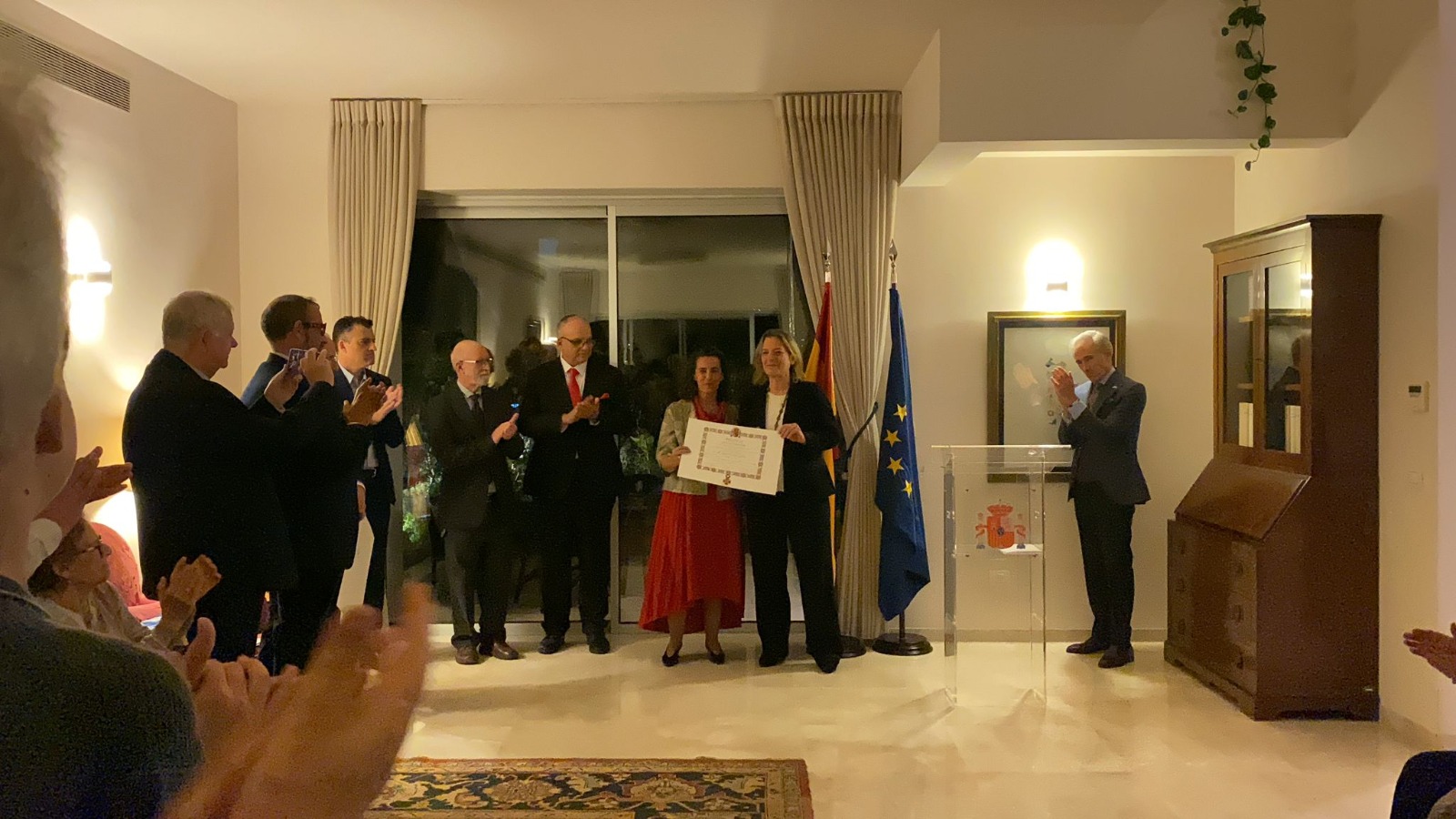
Muchas gracias Myriam y aprovechamos para darte la enhorabuena por la Cruz de Oficial de la Orden de Isabel la Católica por tu contribución a las relaciones entre España e Israel.